DATASTAGE: UNIT TESTING
Native testing for DataStage, made development 5x faster
*short case-study
design-led discovery
cross-product integration
Team
2 to 4 designers,
2 SDEs, Architect
Role
UX Designer
Timeline
2023 Q4 - 2024 Q2
Background
Since 2021, IBM partnered with Data Migrators to offer MettleCI—a DevOps toolkit that brought unit testing to DataStage. The problem? MettleCI lived as a separate tool. Users had to switch between tabs and understand DevOps concepts just to test their data flows.
DataStage customers are data engineers, not DevOps specialists. They needed automated testing without the complexity. But MettleCI's separation made adoption difficult—the workflow felt bolted-on, not built-in.
This project integrated unit testing natively into DataStage as "Test case." Native integration became a major migration driver—MettleCI is included with DataStage licenses, Gartner's Magic Quadrant emphasizes DataOps support, and customers spend 1-2 years migrating to next-gen. By making unit testing native instead of a separate tool, we removed friction from an already complex migration process and strengthened IBM's competitive positioning.
I handled end-to-end design execution under Design Lead Jennifer Jennings, working closely with Barry Squire (IBM ETL consultant), Justin McCamish and John McKeever (Data Migrators co-founders). They provided direct customer insights, having built MettleCI based on real pain points for years.
Key Outcomes
Became a major driver for Legacy-to-next-gen migration
Native unit testing provided DevOps capabilities unavailable in Legacy
Enabled access to proven MettleCI benefits
5x faster job development, 400x faster deployment, and 100% ROI in Year 1 (per IBM partnership data)
Direct customer impact
ING reduced code review time. Data engineers create, run, and schedule tests using no-code/low-code workflows.
Recognized in Gartner Magic Quadrant
Gartner noted "IBM's support for CI/CD [among other features] is highly rated," with native unit testing strengthening this positioning
DataStage next-gen test data configuration (Left); MettleCI test data configuration (Right)
DataStage next-gen Unit Test Report (Left); MettleCI Unit Test Report (Right)
Core usability problems
Make DevOps testing approachable for non-DevOps users
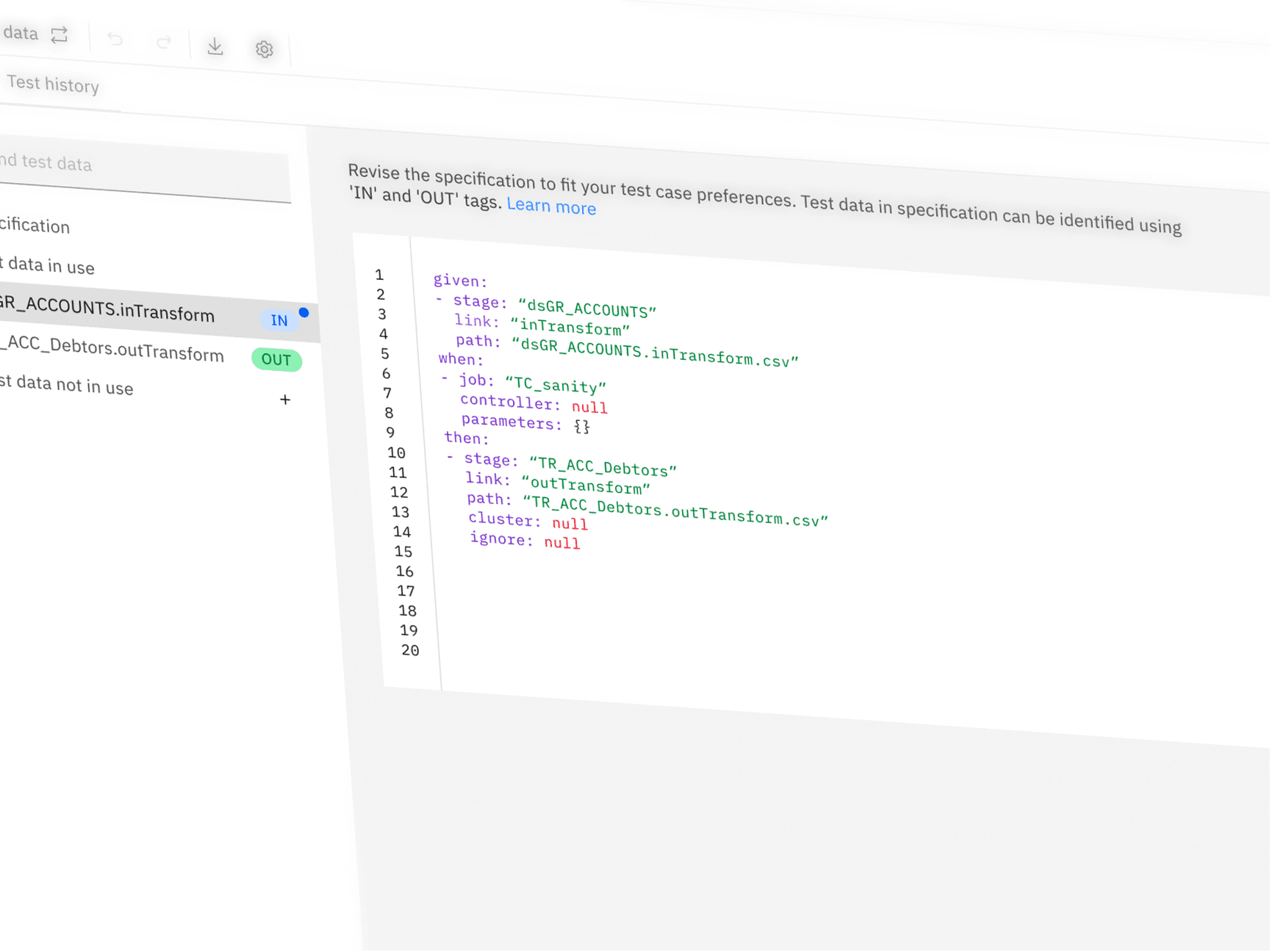
Simplify test data creation (mock inputs, expected outputs)
Design clear hierarchy and navigation for the Test case workspace
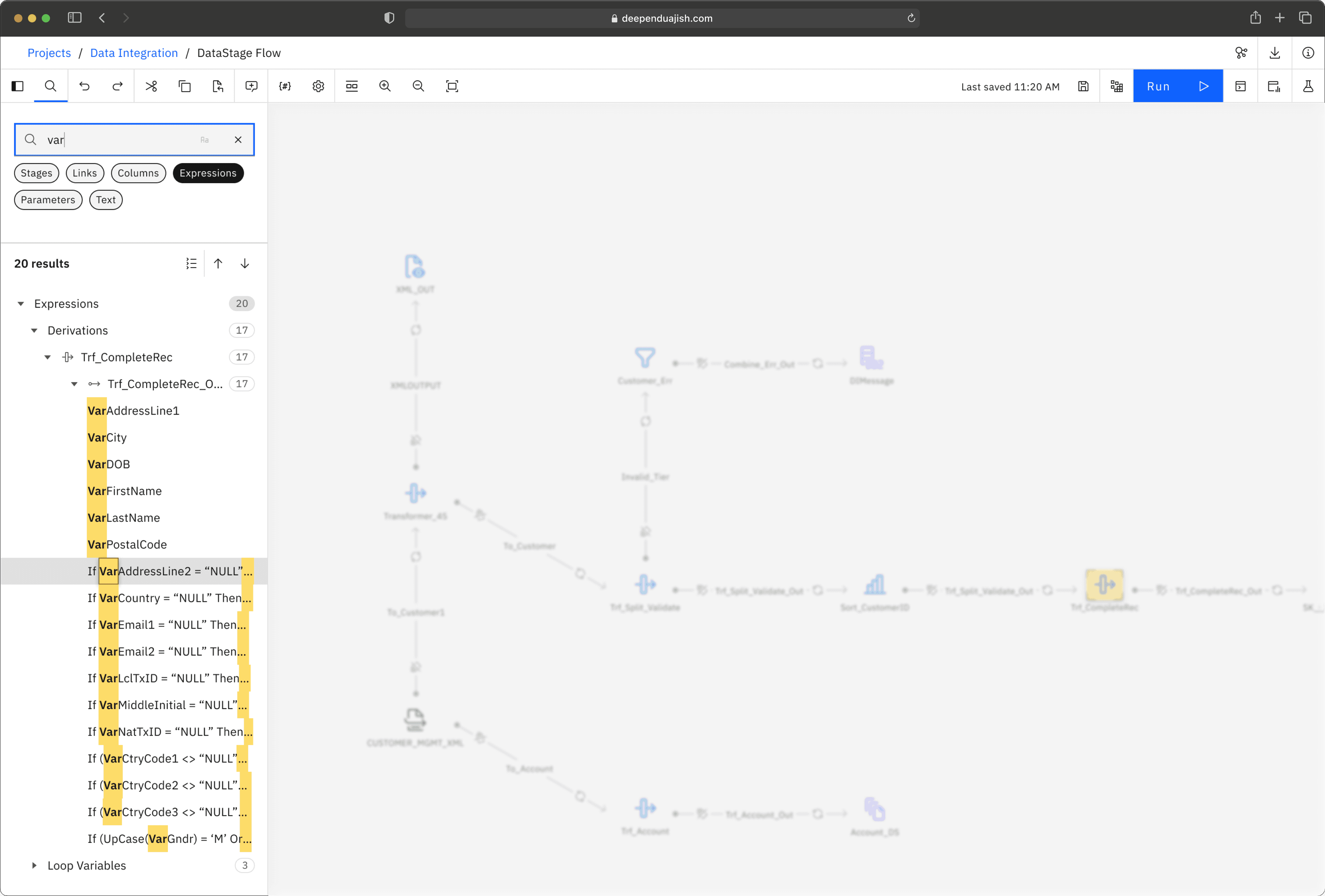
Integrate testing directly into DataStage canvas, not just as separate asset
The breakthrough: Treating the Test case as a proper workspace—not just a form. I designed it to guide users through the testing process with clear empty states, contextual tooltips explaining every concept (intercept, fabrication, generate), and smart defaults that reduced cognitive load. The workspace assists users instead of overwhelming them.
I also fought for—and won—implementation of a proper spreadsheet component for editing test data. IBM products typically used data grids with limited inline-edit capabilities. I made the case that test data editing needed spreadsheet-level functionality, and Test case became one of the first IBM products to implement it.
Design challenges
Designing for complex migration workflows
Customers spend 1-2 years migrating from Legacy to next-gen DataStage, setting up MettleCI test cases during this transition to use immediately upon switching. The design challenge: make unit testing accessible to teams already overwhelmed by migration complexity.
They're learning a new platform, converting thousands of jobs, and managing DevOps workflows they've never used before. I had to design Test case to feel native to next-gen while being simple enough that migration teams could adopt it without adding to their cognitive load during an already stressful process.
Recovering from a screen confusion issue post-launch
I designed data fabrication/generation in a dedicated popup screen because the feature needed real estate. What I didn't realize: the screen looked too similar to the "Edit column" screens used throughout DataStage.
A senior internal DataStage architect (with little unit testing experience) flagged the confusion post-release—users with deep DataStage knowledge mistook the purpose of the screen. I haven't been able to address this post-launch yet, but it taught me to validate designs not just with feature experts but with product veterans who might bring existing mental models.
Making test results actionable, not overwhelming
Showing users thousands of rows (mostly matching) would bury actual failures. The diff table needed to surface only discrepancies with styling that made problems instantly obvious—filtering to differences, color-coding changes, and providing clear legends.
The broader impact
Native unit testing became a major driver for modernization deals. With MettleCI included in DataStage licenses and Gartner's Magic Quadrant emphasizing DataOps support, native integration strengthened IBM's competitive position against free services. Customers migrating to next-gen (typically 1-2 year processes) could now set up test cases during migration and use them immediately—removing the friction of learning a separate tool while already managing complex migrations.
In addition, by removing the friction of tab-switching and making testing accessible to data engineers without DevOps expertise, we enabled customers to access MettleCI's proven benefits: 5x faster job development, 400x faster deployment, and 100% ROI in Year 1.